About
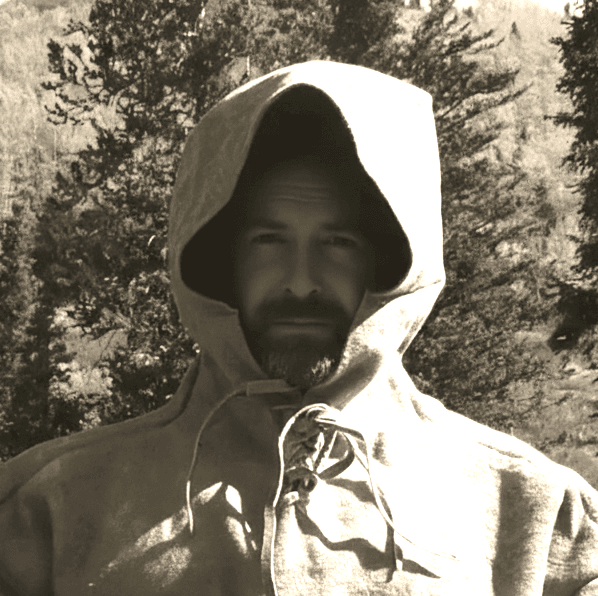
James M. Van Lanen has spent nearly two decades as a professional anthropologist studying and working with indigenous hunter-gatherers on three continents. His fieldwork has taken him from the boreal forests of Alaska and Siberia to the savannas of East Africa, working alongside peoples who still practice — or recently practiced — the subsistence lifeways that sustained all of humanity for the vast majority of our existence.
He is an active subsistence hunter, fisher, and forager based in Alaska, where he lives and works close to the land. His practical experience with wild food procurement and processing is not academic abstraction — it is daily life.
James teaches traditional bushcraft and wilderness skills — flintknapping, hide-tanning, primitive weapons, friction fire, wild game processing, and backcountry hunting — to individuals and groups across the western United States. His classes draw on both anthropological knowledge and hard-won field experience.
His writing has appeared in Hunter-Gatherer Research, Human Ecology, Alaska Fish & Wildlife News, Oak Journal, Black & Green Review, Wild Resistance. He is the author of Human Rewilding in the 21st Century and Turning a Moose Hide into Buckskin, both published by Birch Top Hill Press.
What Drives This Work
Most people who write about “rewilding” have never actually lived it. They write from offices, citing papers, imagining a wildness they have never tasted. This work comes from a different place — from years of traveling the land and living off hunted game, skinning animals, knapping stone, sleeping on the ground, and being on the land with people for whom these things are not hobbies but life itself.
“The question is not whether techno-industrial civilization will collapse, but what kind of humans will be left when it does.”
The drive behind this work is simple and urgent: industrial civilization is destroying the biosphere and our species, and the political frameworks offered by both the Left and the Right are utterly inadequate to the crisis. What anthropology reveals is that another way is not only possible, it is the way we lived for 99% of human history: a subsistence-based life on the land, as part of, not separate from, an ecosystem.
This is not nostalgia. It is not primitivism as caricature. It is a clear-eyed look at what the ethnographic and archaeological record actually shows about human social organization, ecological embeddedness, and the meaning of freedom. The goal of this work — the books, the teaching, the writing — is to explain precisely what we have lost, to begin physically recovering it, and to share this wisdom with anyone willing to listen.